It began with metal components from the client and a company event approaching fast. Layher wanted to give its employees something with a story of its own. Our task was to turn those parts into finished keepsake plaques, from choosing the making route to the white lettering and final surface.
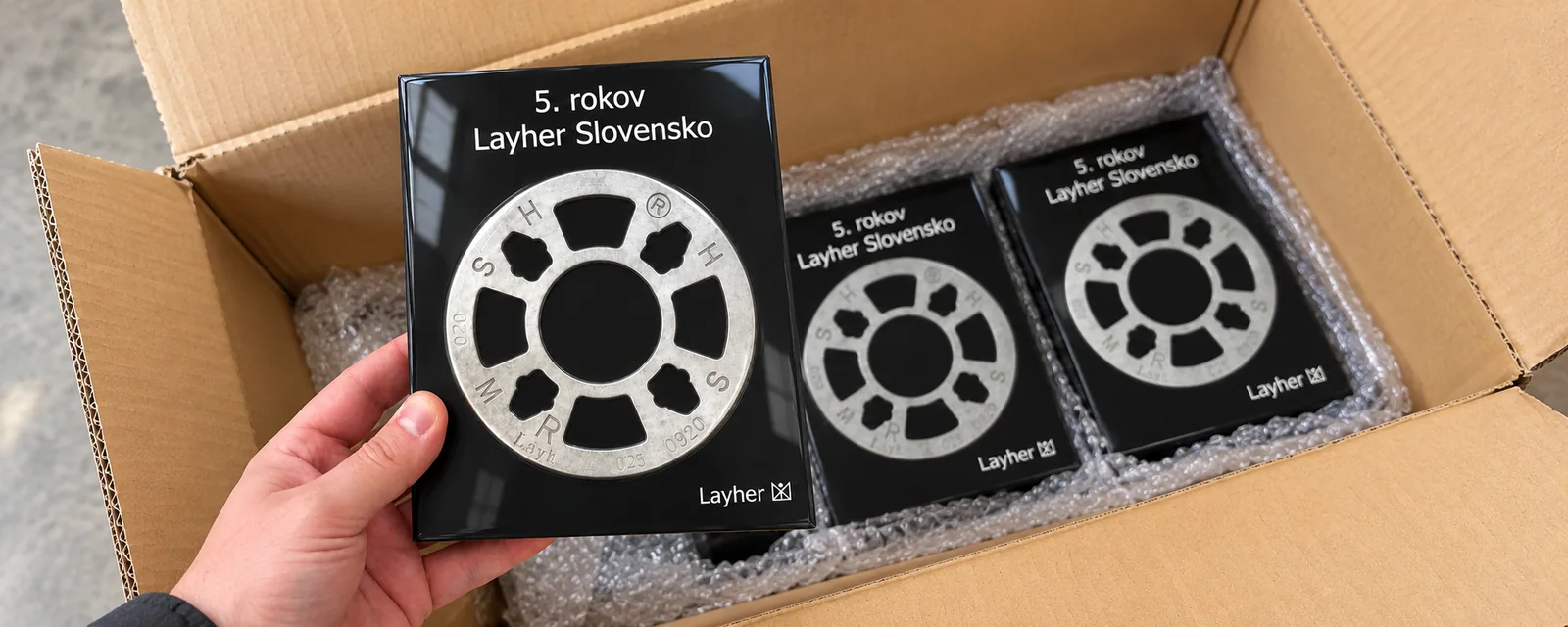
The starting point came from the client
Layher supplied more than a logo. The company provided the metal components that would become part of the gift. That gave the design a clear starting point: we did not need a generic symbol of the business, because a meaningful object was already in front of us. It had its own outline, weight and connection to the company’s work.
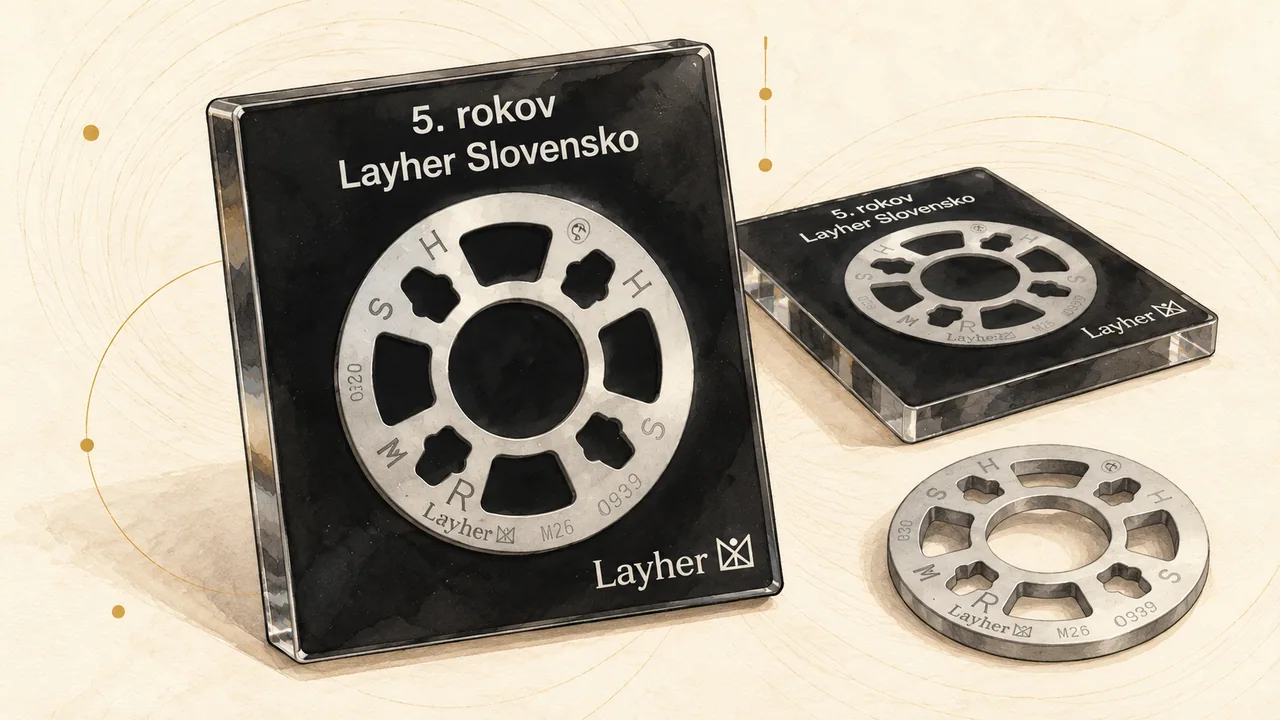
We chose a simple rectangular plaque to give it space. The black base would bring out the silver metal; the transparent layer would keep it visible; white lettering and the logo would mark the occasion. None of those elements needed to compete with the main feature.
The deadline mattered just as much as the appearance. With little time before the event, design and production could not be treated separately. The choice of casting form had to work with the subsequent pouring, machining and personalisation.
When the deadline changes the making route
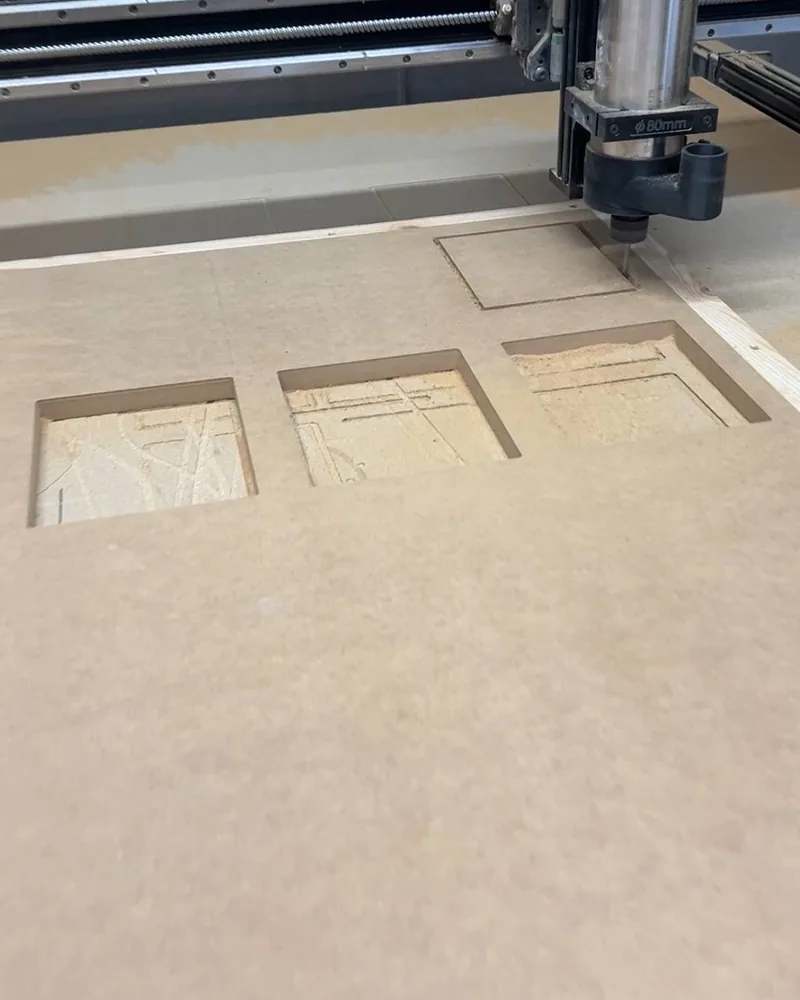
With more preparation time, we would have considered a large silicone mould for a similar batch. Here, we chose timber sheet matrices, machining repeated recesses on the CNC to form the individual plaques. It was a response to this programme, not a claim that timber is always preferable to silicone.
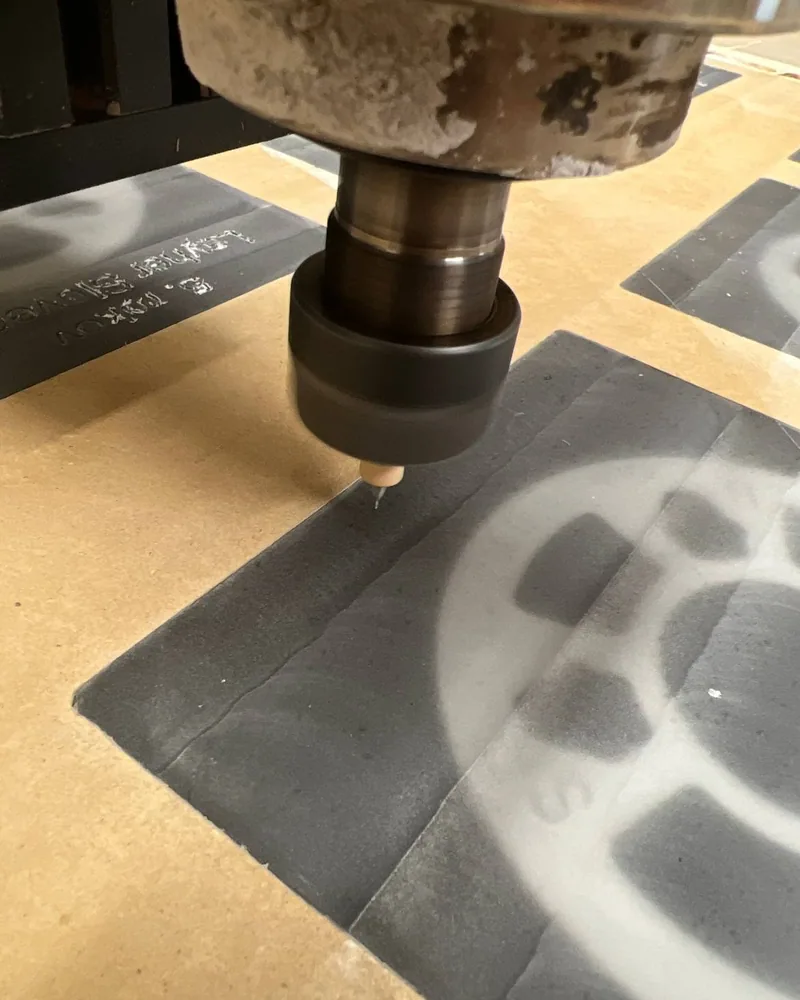
Machining the pockets was only the start. They then needed finishing, priming and preparation for casting. Each position had to accommodate the same sequence of layers, so that unseen preparation mattered just as much as the visible finish.
That is what an urgent commission meant in practice: finding a more workable route where possible, rather than removing stages the material still needed. The aim was to make the operations follow one another coherently.
Black resin, metal and a clear cast
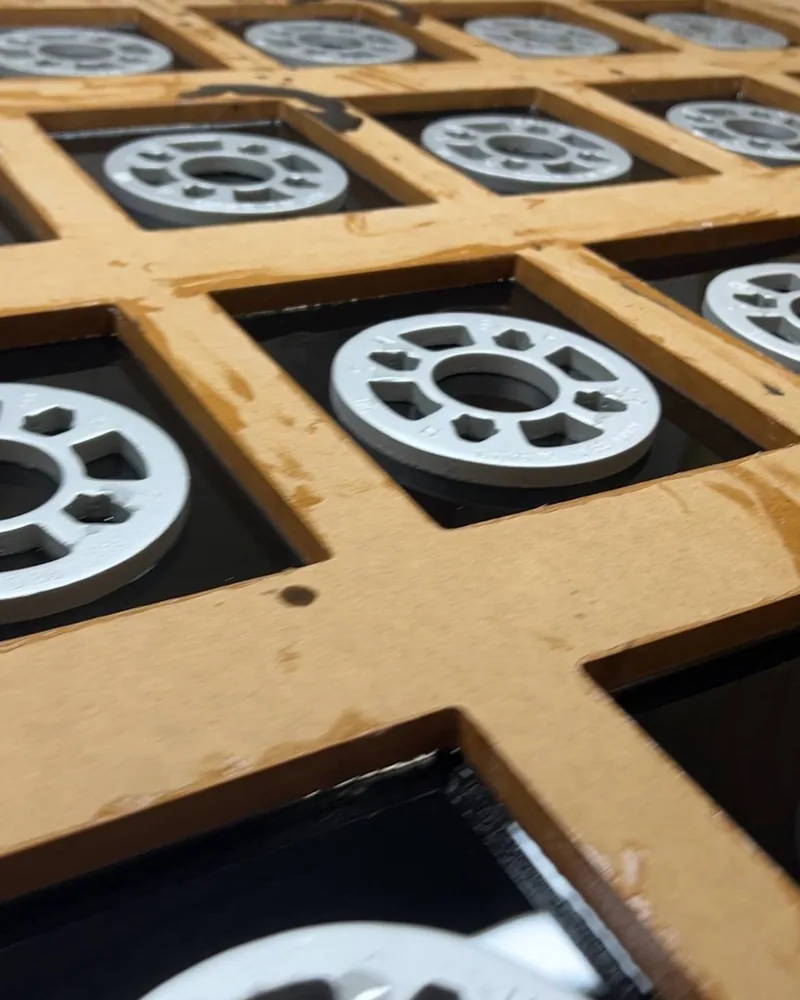
The first pour was the black epoxy base, applied as a controlled layer and allowed to cure for the next operation. It established the contrast that defines the finished plaque: a silver circular component against a dark background.
Each supplied metal part had its own preparation. We cleaned and primed it, then secured it in position on the cured black layer. These steps barely announce themselves in a final photograph, but they are an important part of incorporating a client’s material.
A transparent epoxy layer followed. Its job was to make the metal part of the complete object while retaining the view of its outline and openings. The palette stayed restrained: black, silver and clear resin. The company component carried the interest without extra colour effects.
Curing remained necessary despite the short deadline. At this point, the casting was still a workpiece: flat faces, lettering and the finished surface were yet to come.
The lettering was not simply printed on top
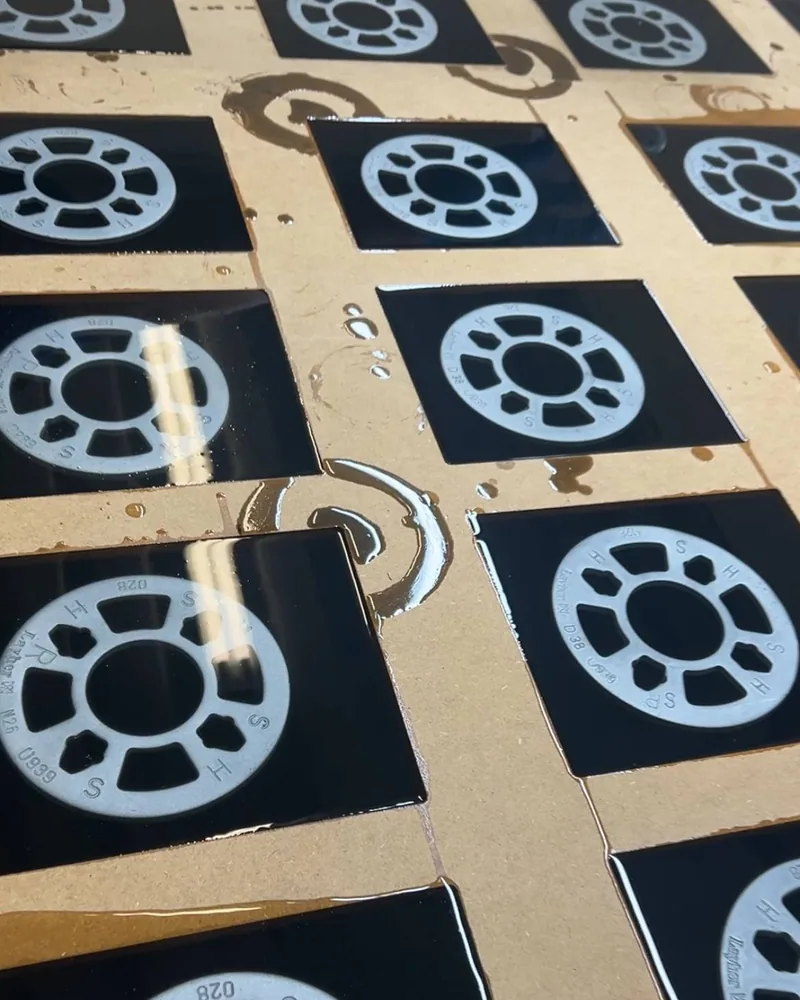
Once cured, the matrices and cast pieces returned to the machine. Material was removed from the upper and lower faces to flatten them. That prepared the work for personalisation with a clear contrast against the dark surface.
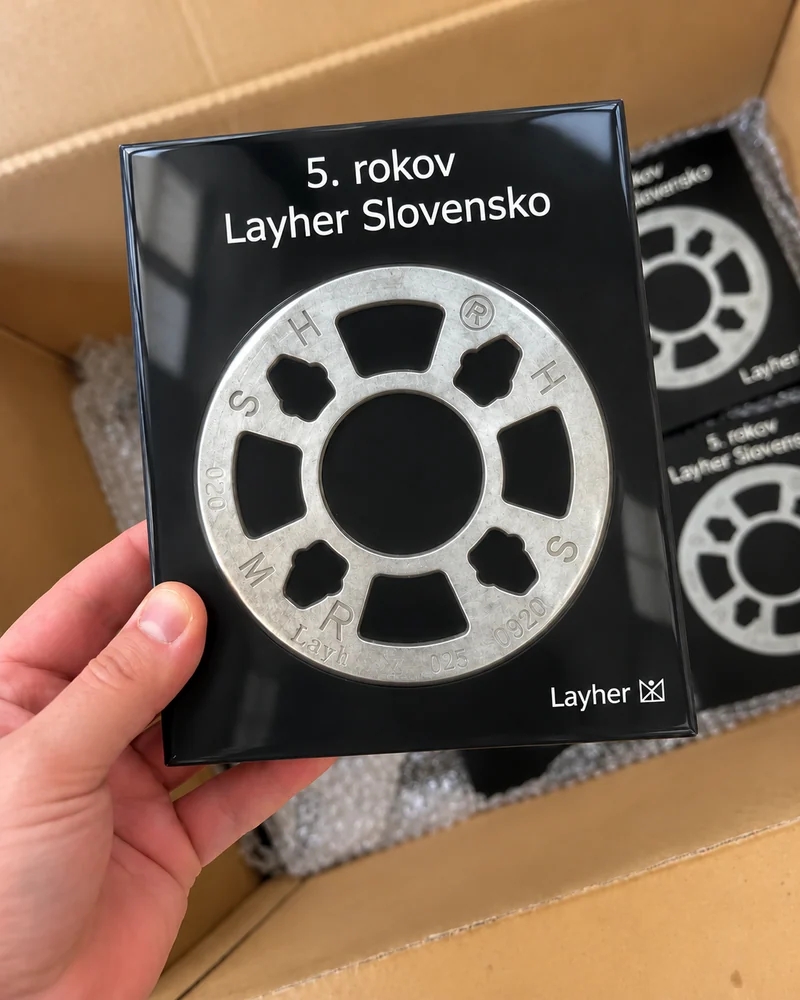
Using a fine CNC tool, we cut shallow recesses for the inscription and logo. The finished pieces carry the original Slovak wording “5. rokov” and “Layher Slovensko”, with the Layher mark. Those lines were made in the material, not added as a final printed layer.
We then filled the recesses with white epoxy. The white colour occupied the machined lettering, after which the surface could receive its final treatment. Engraving and infilling therefore formed a distinct part of the production sequence.
For similar commissions, “add a logo” can mean very different things. Here, CNC machining and coloured infill made the branding part of the plaque itself.
A working component becomes a personal thank-you
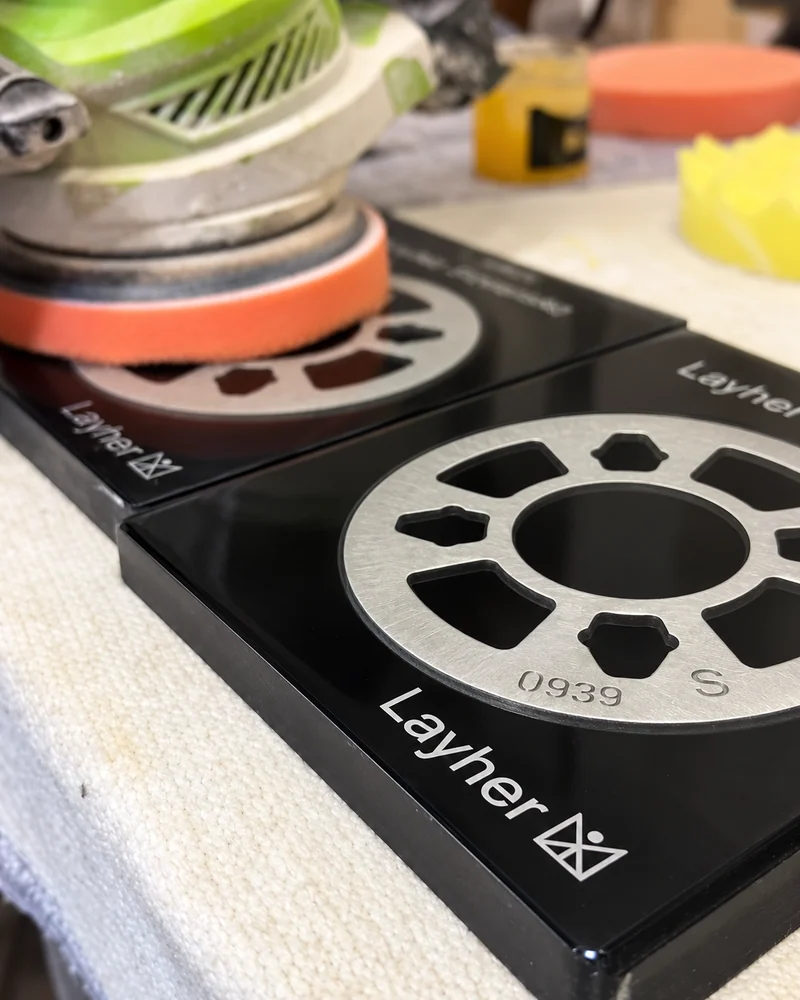
After the white infill came sanding, surface finishing and a final wax treatment. The separate stages came together as a completed object: black base, visible metal component, transparent cast and pale graphics.
What matters most to us is that the original part remained recognisable. It acquired a new role without losing its connection to the client. A company component became an employee keepsake whose meaning went beyond the logo.
The project also shows why we consider a brief as a whole. The matrix, metal preparation, resin layers and engraving method were connected decisions, all helping turn an urgent request into a finished piece.
If your business has a component, material or symbol that the team immediately recognises, it could be a useful starting point for a gift. Send a photograph, the purpose and the deadline. We can develop a making route around what you want the result to express.
Your questions answered
Why did you use timber casting forms?
The order was urgent. CNC-machined timber matrices were the chosen preparation for that programme; with more time, a large silicone mould would have been considered.
Was the white lettering printed on the surface?
No. Shallow CNC recesses for the text and logo were filled with white epoxy, followed by final sanding and waxing.
Could you incorporate one of our own parts?
We need to assess its material, size and surface. Start with photographs and, ideally, a trial component; the method is developed for the particular brief.
Bespoke making for businesses and design partners
Does your company have an object with a story?
Send a photograph of the component, the quantity and the event deadline. We can discuss how it could become part of a finished gift.