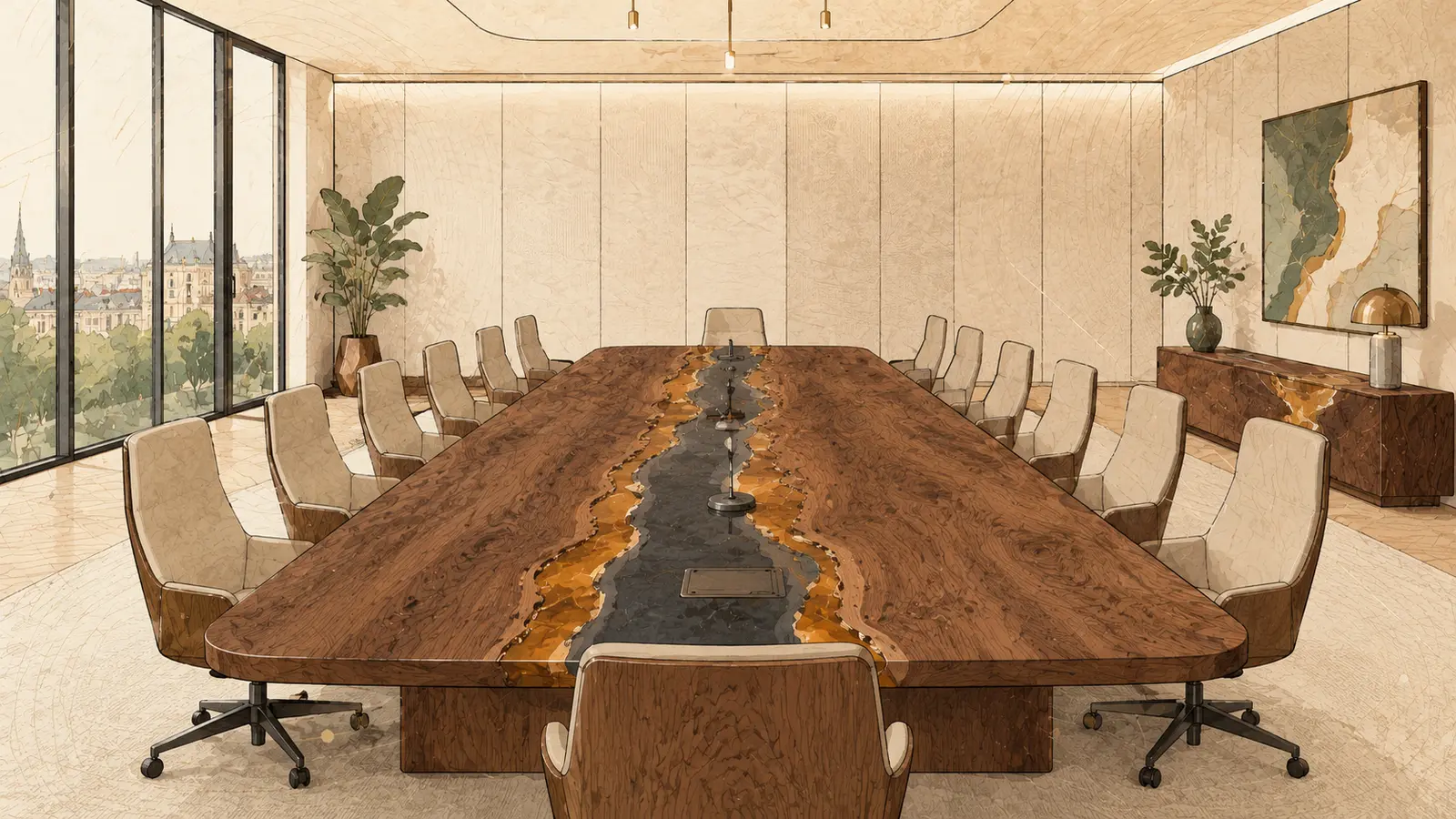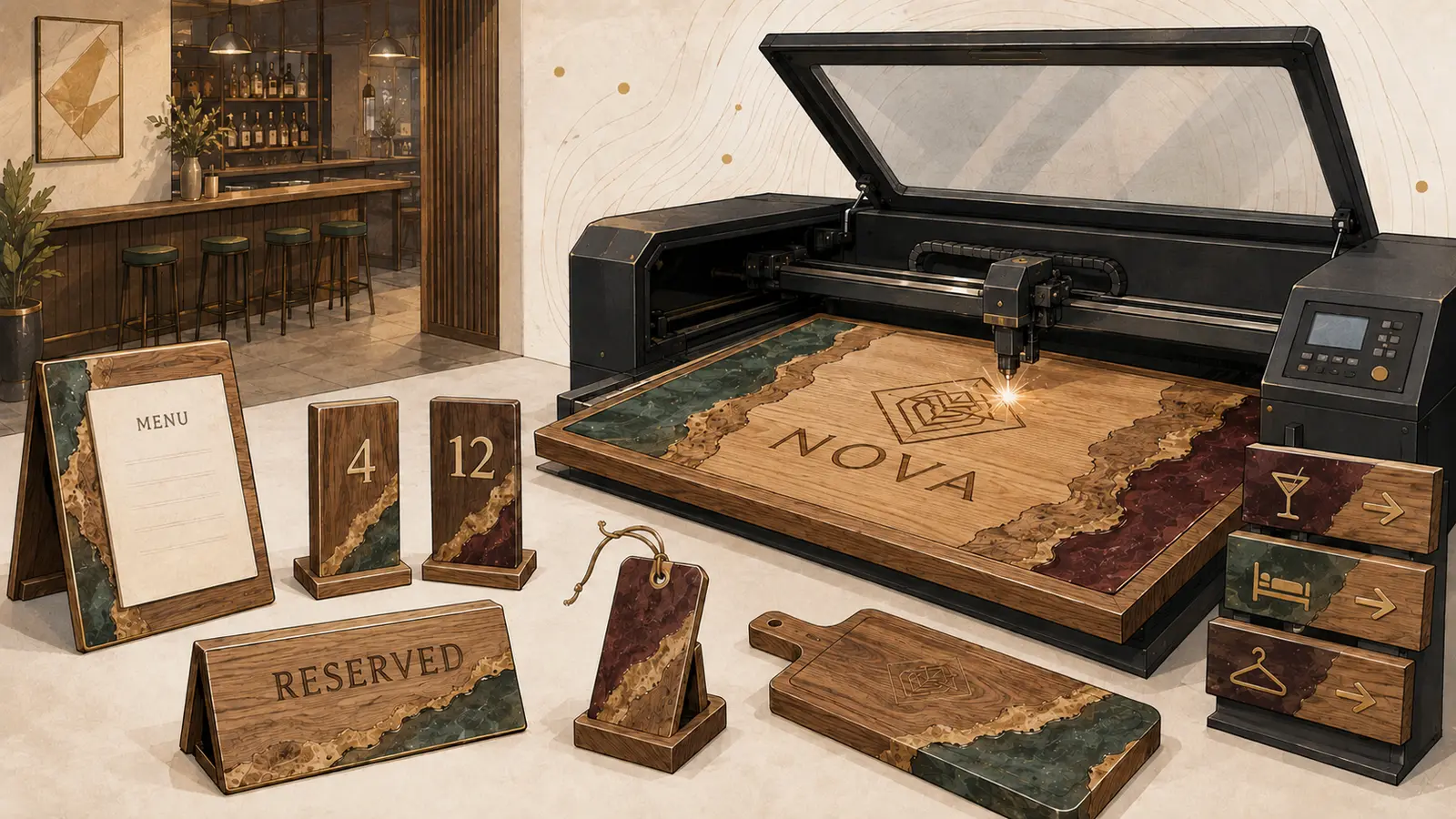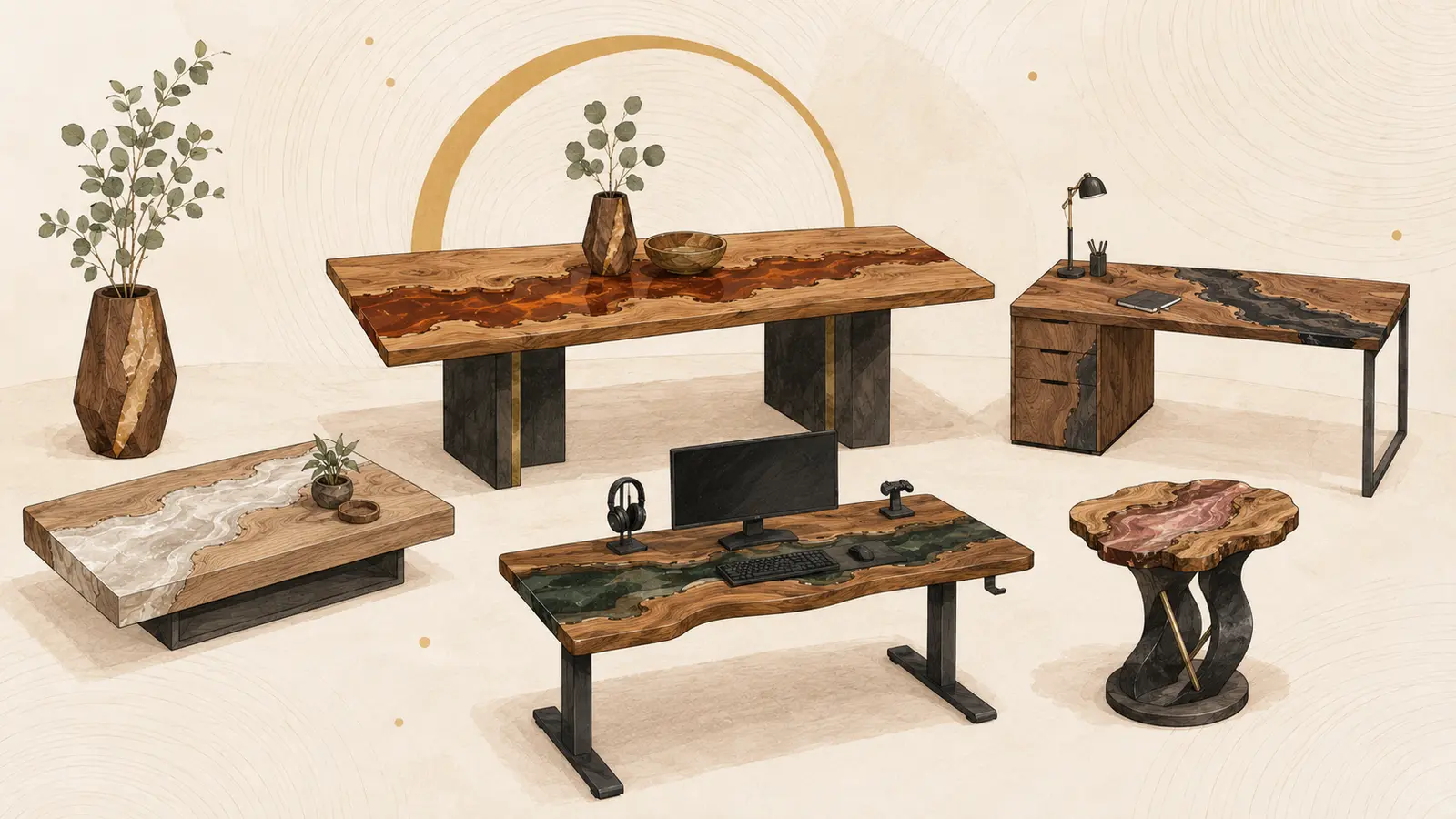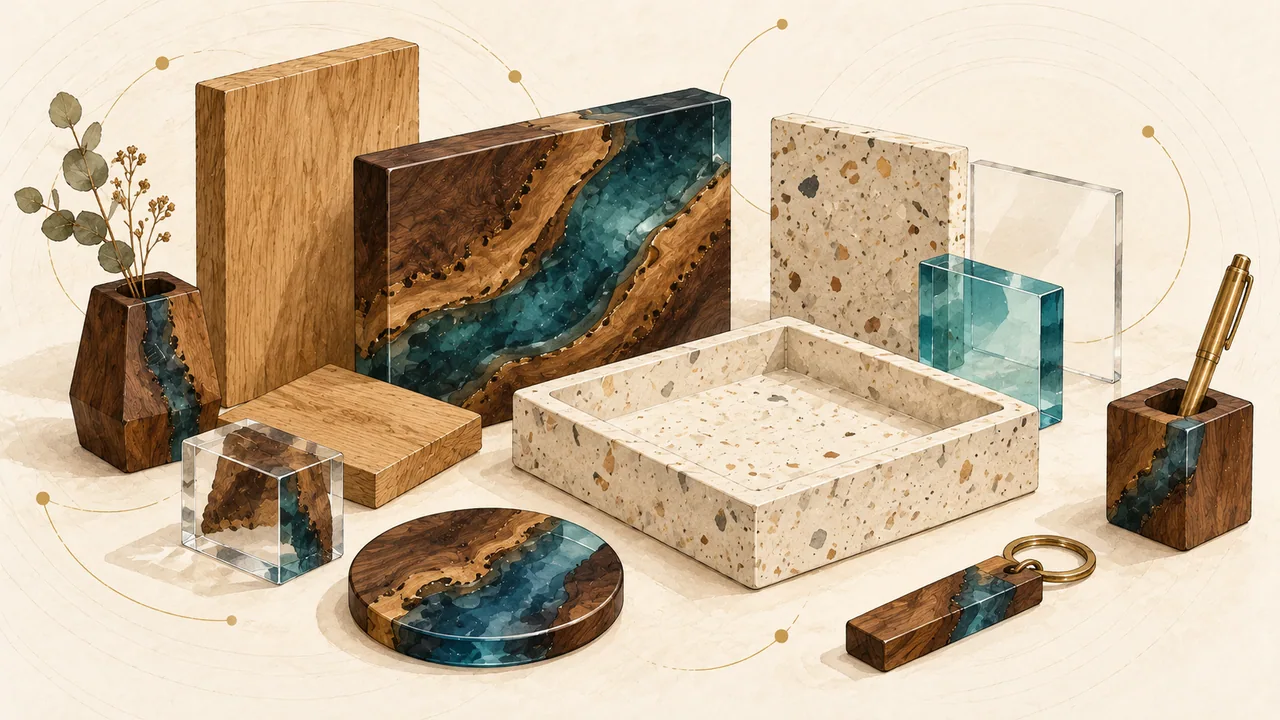
A good bespoke project starts with what the piece needs to do, not with “let’s make it in resin”. Who will use it? How should it feel? Where will it live? At Ahoj Epoxy we work with timber, epoxy resin, Jesmonite and acrylic. Sometimes one material does the job beautifully; sometimes a thoughtful combination makes more sense.
Start with the purpose, not the effect
For a crisp, readable sign, accurately machined acrylic may serve the brief better than an elaborate casting. For a gift containing a company component, clear resin has a real purpose: it keeps the object visible and makes it part of a new piece. A matt mineral accessory and a warm timber surface offer very different experiences, even in a similar colour.
Set three priorities before choosing: function, feel and the conditions the piece will face. Treat a photograph as the start of a conversation, not proof that a surface will withstand your particular routine.
What each material brings to the project
On a smaller screen, swipe sideways to see the full table →
| Material | Where it shines | What needs thought |
|---|---|---|
| Timber | Natural grain, warmth and individual character | Movement, construction and a suitable finish. |
| Epoxy resin | Transparency, colour and encapsulating meaningful objects | The specific system, full cure, sunlight and heat exposure. |
| Jesmonite | A tactile mineral look, matt colour and terrazzo effects | Absorbency, surface protection and the intended use. |
| Acrylic | Clean outlines, transparent or coloured planes and precise graphics | Scratching and a cleaning routine suited to the material. |
Timber: individuality is part of the point
Timber suits pieces that should feel natural and pleasant to touch. For a corporate batch, that means accepting differences in grain between individual gifts. Where consistency matters, agree a range of tones and a material character rather than expecting identical surfaces.
A table needs consideration of grain direction, joints, fixings and its future environment. Engraving also reads differently on pale and dark timber. Test a fine logo on the material that will actually be used, rather than approving it solely against a white screen.
Resin: transparency with something to say
Resin earns its place when you want a river detail, a particular contrast or a visible object within the piece. It is not a universal shield against wear. We ask about sunny windows, hot objects, cleaning products and how the item will be handled before settling the specification.
Encapsulating metal means looking at its surface, position and the interfaces between casting stages. There is more to it than pouring. Our Layher employee-gift project shows how a client-supplied component can give a resin piece a genuine connection to the business.
Jesmonite: a mineral character of its own
Jesmonite AC100 combines a mineral base with a water-based acrylic liquid. It is an interesting choice for decorative pieces where a matt surface, subtle pigment or terrazzo effect matters. Other Jesmonite systems have different properties: the brand name alone is not a technical specification.
Surface protection still needs attention. A sealer does not automatically make a piece waterproof or dishwasher-safe. Jesmonite does not recommend direct food contact without appropriate verification. A tray for jewellery is therefore a different brief from a vessel for serving food. Decide the use first, then assess the complete material and finish.
Acrylic: clear geometry and legible branding
Acrylic is worth considering for display stands, signs, layered logos and awards with a precise silhouette. For illuminated work, the sheet type and thickness, light position and concealed technical details all affect the result. A sample is more useful than guessing from a visualisation.
Follow the care instructions for the particular piece. Röhm’s guidance for PLEXIGLAS® recommends soft cleaning materials and warns about dry rubbing and unsuitable cleaning substances. Acrylic glass should not simply be treated like an ordinary window: its appearance and maintenance requirements are different.
A practical route to the right choice
- Tell us whether the piece is a gift, functional accessory, sign or item of furniture.
- Explain exposure to water, sunlight, heat and cleaning products.
- For a batch, identify what must match: colour, size, branding or overall character.
- Approve a physical sample of the important finish and personalisation.
- Agree packaging and care before production begins.
You do not need a finished drawing to contact our Bratislava workshop. Send the purpose, approximate quantity and a budget outline. We can suggest where a material adds something useful and where combining more materials would merely add cost. Workshop visits are by prior arrangement.
Your questions answered
Can several materials be used in one piece?
Yes, where the combination supports its function or appearance. Fixings, different surface properties and care for the complete item need to be resolved.
Is Jesmonite another name for epoxy?
No. AC100, for example, is a water-based mineral–acrylic composite. Epoxy belongs to a different material family, so their properties are not interchangeable.
How do we match our brand colour?
We agree the target shade and approve a sample in the chosen material. A colour reference or screen image alone cannot guarantee the same appearance on timber, resin and acrylic.
Technical references and practical guidance
We checked the technical background against the primary references below. Materials and methods are specified for each commission; a reference does not imply that its manufacturer supplied the documented project.
Bespoke making for businesses and design partners
Let the purpose guide the material
Send us the idea, approximate quantity and a photograph or sketch. We will compare suitable options without steering every project towards the same material.